Eight tools into one system — and the problem it didn't solve.
Quagga Designs got working infrastructure and closed anyway. Both halves matter, so both are here.
The situation
Quagga was spending on paid traffic without a system underneath it.
- Attribution unclear — no reliable answer to which channel drove revenue
- Eight-plus tools that didn't talk to each other
- Inventory updated by hand
- Order-to-fulfillment split across three separate systems, none automated
- Founder's day dominated by operational questions
“We were spending on paid traffic without a solid system underneath it. Attribution was unclear, operations were manual, and our tool stack was expensive and disconnected.”
Carl Heinrichs
What was built
| Custom admin panel | All business data in one interface instead of tab-hopping between eight tools |
| Order-to-fulfillment automation | Foxy.io → inventory → 3PL, running without anyone re-keying it |
| Real-time dashboards | Margin and inventory visible as they change, not reconstructed weekly |
| Attribution layer | Which channel actually drove a sale, instead of three systems each claiming it |
| Stack consolidation | Eight-plus subscriptions replaced by one owned system |
Carl kept the code, the data and the accounts. Ownership was the point, not a closing argument.
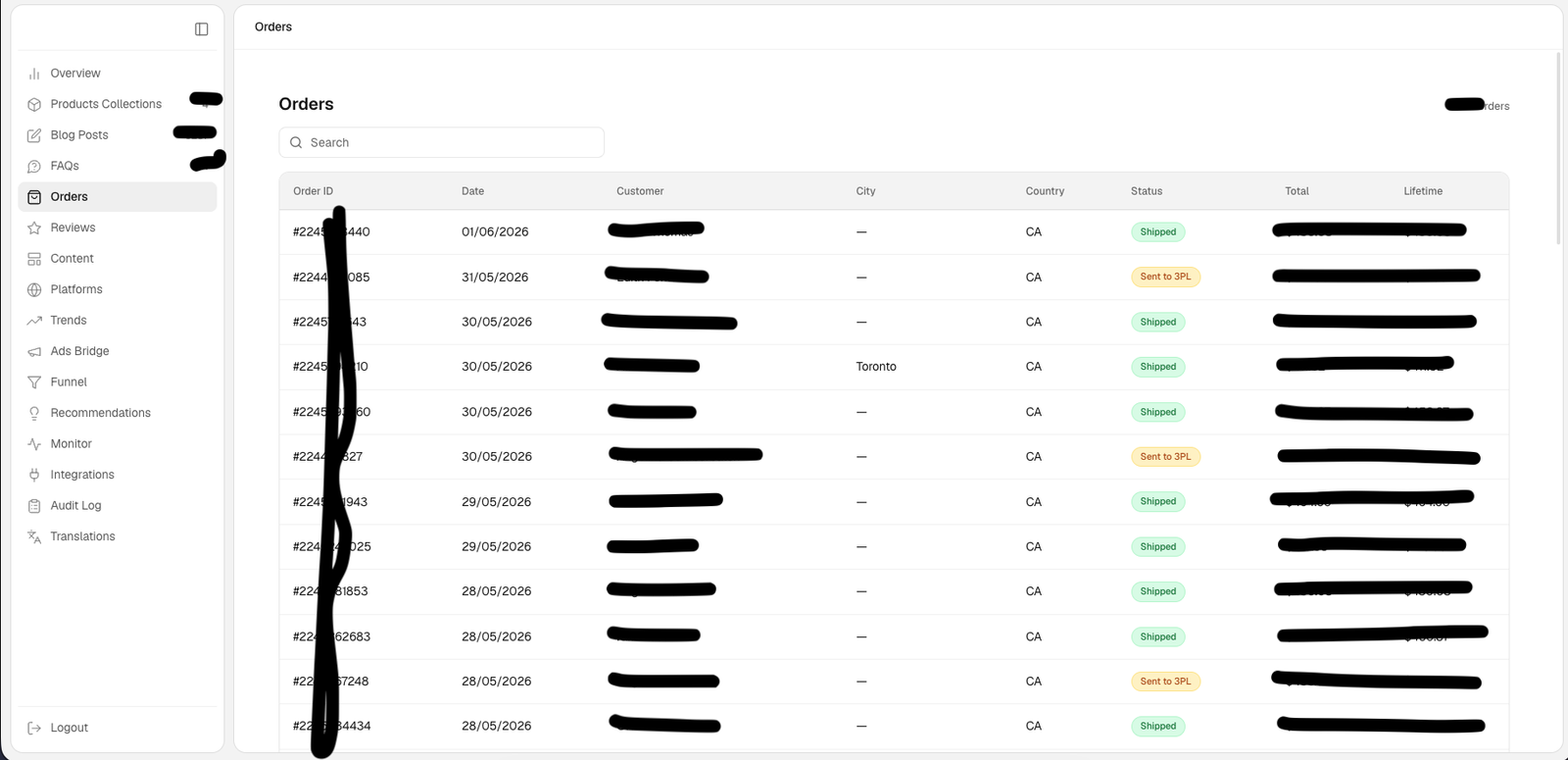
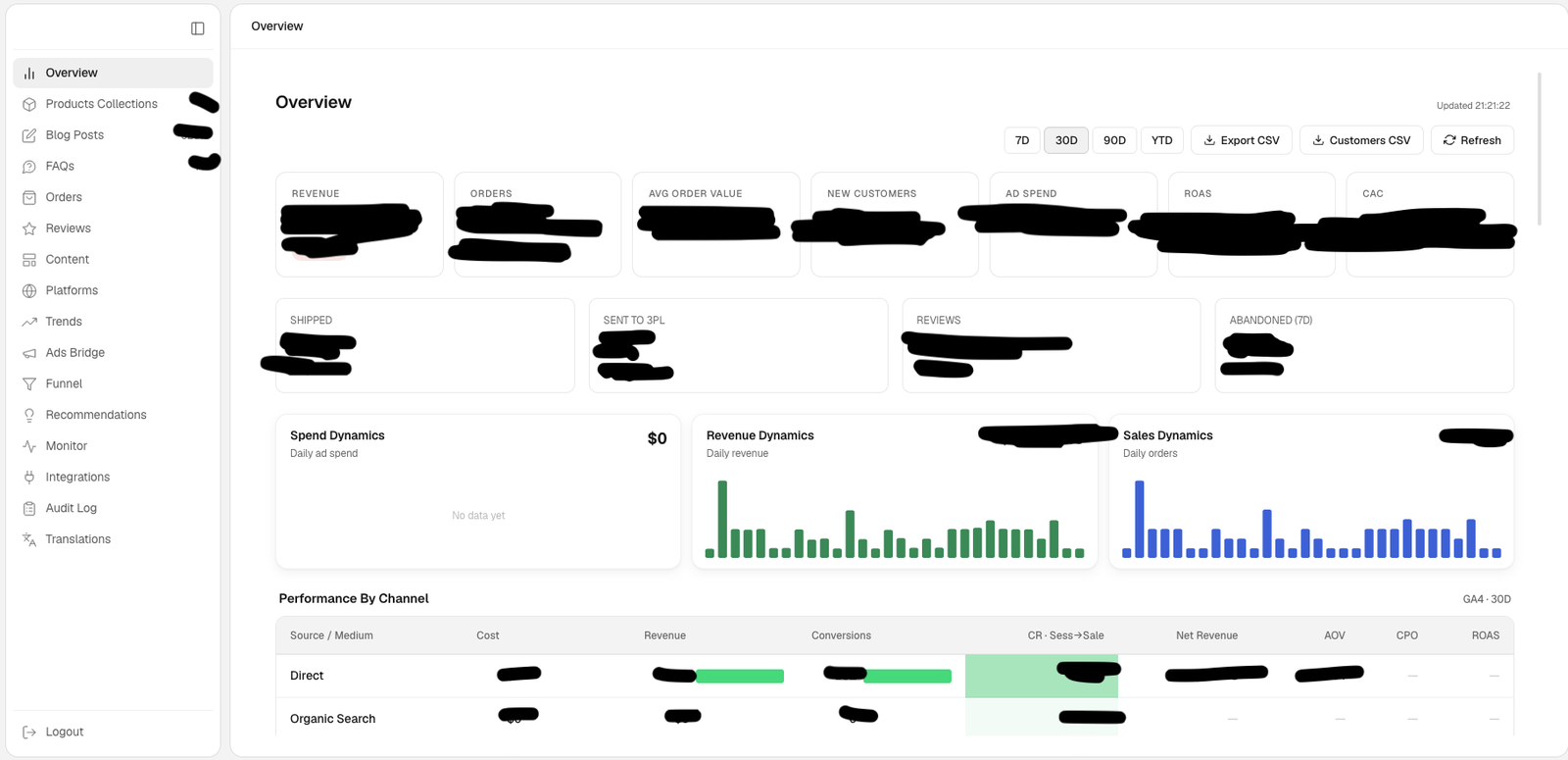
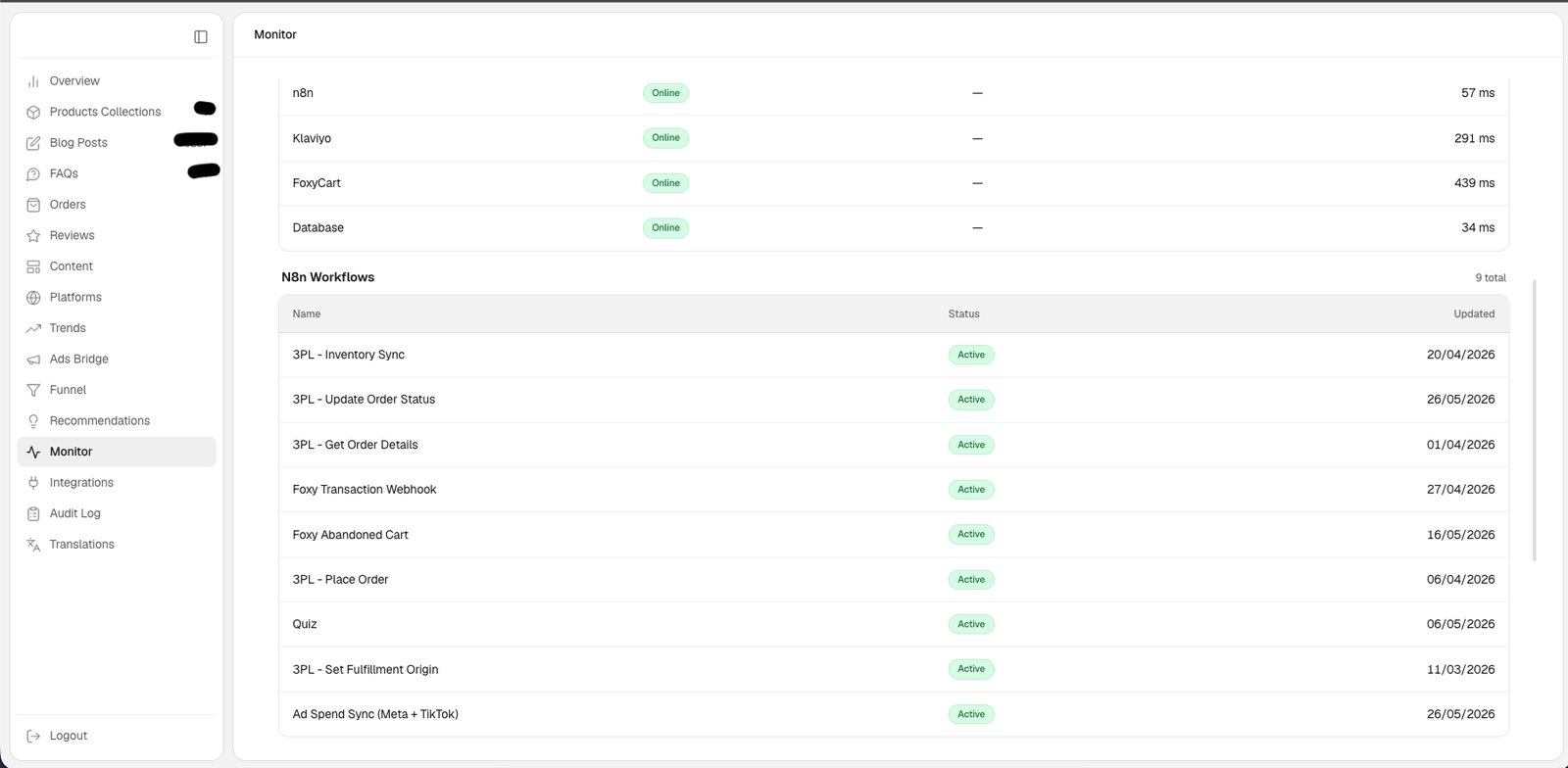
What it measurably changed
| Result | Figure | Source |
|---|---|---|
| Annual SaaS cost eliminated | $4,646 | Carl's accounting |
| Manual work automated | 15+ h/week | Carl's estimate |
| Fulfillment pipeline | fully automated | Carl's recommendation |
| Business visibility | real-time | Carl's recommendation |
“The results were concrete: $4,646 in annual SaaS savings, a fully automated fulfillment pipeline, and a dashboard that gives me real visibility into the business for the first time.”
Carl Heinrichs · LinkedIn recommendation · 17 June 2026
What it did not change
The brand closed. Three forces were working against Quagga at once:
- Tariffs closed their US market — the majority of addressable demand
- Labour at $28–32 an hour in Canada, against competitors paying a fraction
- Eleven consecutive months of negative margin before the automation existed
Operations were one problem out of three. The system removed manual work and software cost. It could not restore a market closed by trade policy, and it could not change what an hour of labour costs in Ontario.
What this proves, and what it doesn't
Proves
- The mechanical layer of a DTC operation is codeable, and consolidating it works
- Ownership transfers cleanly — code, data, accounts
- A founder can get real visibility without buying another subscription
Does not prove
- That automation changes a company's trajectory
- That payroll cost comes down
- That the model works at scale — this is one engagement
What changed in how AGIT works because of this
Dependency is a bad strategy
Carl had a panel he couldn't maintain himself. When he stopped paying, the dependency protected nothing — he closed anyway. Every build since is owned by the client from day one and maintainable without us.
Automation is not a rescue
A brand with a closed market and a cost structure it can't survive doesn't need a dashboard. Qualification now exists partly to identify that case and decline it, rather than take the money and deliver a system into a business that won't be there in a year.
A guarantee has to be measured in something the client verifies
Quagga had no baseline. Nobody wrote down what the processes cost before the work started, so “it's better now” was the only available conclusion. Every engagement now records a signed baseline in week one and measures the same processes at day ninety.
Scope has to be bounded
One year on one client with no written blueprint is how a project becomes open-ended. Six weeks now means a signed blueprint at the end of week two, and anything outside it is a change request.
Carl is reachable and the brand's closure is public. If any figure here doesn't hold up, it should be easy to find out — that's the point of putting it in writing.